Reduce Aviation Emissions
Environmental Defense Fund
While decarbonizing aviation is complex, there are practical, near-term actions companies can take—from shifting transport modes and improving efficiency to investing in high-integrity, low-carbon sustainable aviation fuels (SAFs).
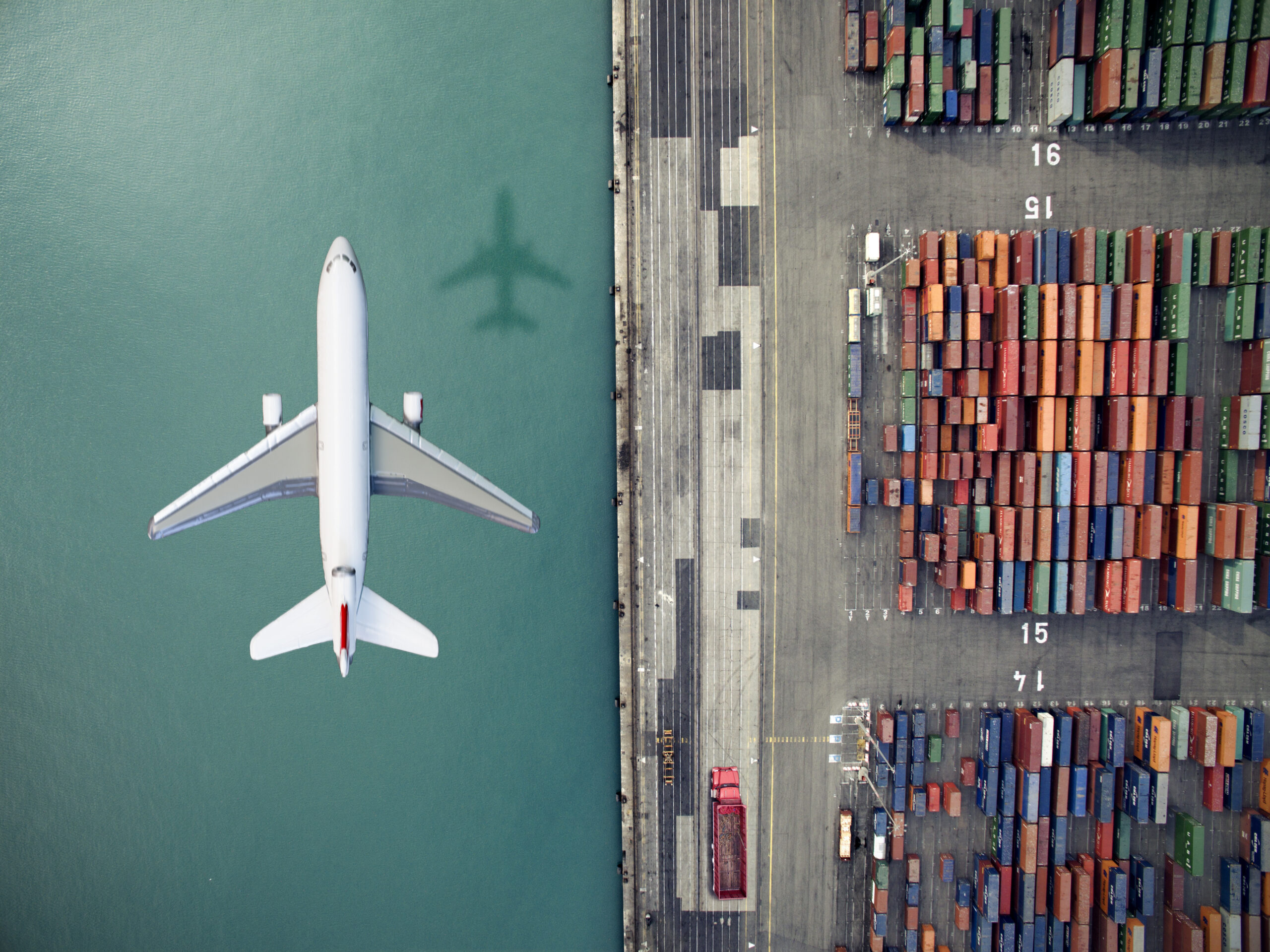
Aviation is considered a hard-to-abate sector due to its weight and size requirements, the cost of new technologies, and safety requirements. Air transport emissions currently make up about 2.5% of global CO2 emissions, and 3.5% when non-CO2 impacts on climate are taken into account.1 If aviation were a country, it would be among the 10 biggest emitters, ahead of nations like Brazil, Mexico, and the UK.2
The primary near-term solutions for mitigating aviation emissions include operational changes such as mode shifting and efficiency improvements, and investing in high-integrity, low-carbon sustainable aviation fuels (SAFs).
Adopt Operational Changes
Companies may adopt various strategies to limit emissions associated with the transportation of goods and services by air, aiming to reduce their carbon footprint. Here are some common strategies:
Supply Chain Optimization and Mode Shifting
Companies are optimizing their supply chains to minimize the need for air transportation. This involves strategic planning, inventory management, and distribution network optimization to reduce reliance on air freight. Shifting transportation modes from air to more sustainable options, such as sea or rail, for certain goods and services can significantly reduce emissions. This is particularly applicable to less time-sensitive shipments.
Efficiency Improvements
Enhancing the efficiency of air cargo operations can reduce emissions per unit of transported goods. This includes optimizing routes, increasing load factors, and implementing more fuel-efficient aircraft.
Smart Packaging and Logistics
Implementing smart packaging solutions and logistics technologies helps minimize waste and optimize cargo space, reducing the need for additional flights. This includes using lightweight materials and efficient packaging designs.
Invest in Sustainable Aviation Fuels
SAFs emerge as a promising solution for significant decarbonization in the aviation industry, especially as there has been increased investment in SAF feedstocks and production pathways. A strategic shift towards incorporating high-integrity, low-carbon SAFs can empower air carriers to actively reduce their Scope 1 emissions, and signal demand for a solution that can lead to a more sustainable future for air travel.
What is Sustainable Aviation Fuel (SAF)?
SAF is a drop-in fuel, meaning it is certified for use in existing aircraft and infrastructure without requiring any modifications. It is made with renewable or waste feedstocks, such as switchgrass or corn stover, or waste materials such as used cooking oil or the organic fraction of municipal solid waste.
- Technical Advantages: One of the key advantages of SAF is its compatibility with existing aviation systems. Commercial aviation can seamlessly incorporate SAF at a blend ratio of up to 50%, meeting the same technical and safety standards as traditional kerosene-based jet fuel.
- Sustainability Certification: In addition to technical safety standards, it is imperative for SAF to undergo rigorous sustainability certification. This ensures that SAF not only meets high technical and safety standards but also adheres to credible sustainability criteria. Sustainability certification validates that the SAF lifecycle assessment (LCA) accurately reflects emissions from every step of the supply chain, from feedstock sourcing to combustion in aircraft. Furthermore, the certification ensures the avoidance or minimization of negative environmental and social impacts, such as deforestation, biodiversity loss, and food insecurity, associated with SAF production.3
- Current Challenges: While SAF is commercially available, its adoption faces challenges. Presently, SAF is relatively expensive and in limited supply, constituting less than 0.1% of the global jet fuel supply. The cost of SAF remains at a significant premium compared to traditional fossil jet fuel.
- Growing Interest and Potential: Despite these challenges, there is a notable and growing interest among airlines, businesses, and passengers in reducing aviation emissions by embracing SAF. This heightened demand, coupled with the existing supply-demand imbalance, presents an opportunity to stimulate increased production and decrease the green premium between SAF and conventional jet fuel.
It is important to highlight the necessity for public funding to reward only high-integrity fuels that contribute sustainably to mitigating climate change. Offering taxpayer-funded subsidies for the wrong biofuels could trigger a spike in unchecked greenhouse gas emissions, along with irreversible harm to people and nature.
How Can SAF Reduce Emissions?
In the aviation industry, emissions primarily come from the combustion of traditional jet fuels. SAF with high integrity plays a pivotal role in mitigating these emissions for airlines and other aircraft operators through two key mechanisms:
- Lifecycle Emission Reduction: SAF offers significant lifecycle emission reductions in comparison to traditional jet fuel. Across the entire life cycle, spanning from feedstock sourcing to combustion in aircraft, high-integrity SAF can significantly and even achieve close to zero lifecycle emissions.
- Drop-In Compatibility: SAF is engineered to seamlessly replace conventional jet fuel, serving as a drop-in substitute for existing aircraft engines. This not only reduces direct emissions from aircraft combustion but also obviates the need to manufacture and acquire new materials for upgrades or modifications.
What Makes High-Integrity SAF?
SAF provides a climate benefit when it reduces lifecycle GHG emissions, as compared to fossil jet fuel. However, not all SAFs are created equal. Some can lead to greater emissions than the fossil jet fuel it is meant to replace or cause negative effects on ecosystems and communities. A high-integrity SAF will follow a robust sustainability framework characterized by:
- Credible Emissions Reduction: The production and use of SAF, as determined by a credible lifecycle assessment, should result in a substantial reduction (ideally achieving at least 80% emission reduction threshold) in greenhouse gas emissions compared to conventional aviation fuels. This reduction is a fundamental aspect of SAF’s contribution to sustainability.
- Adherence to Environmental and Social Safeguards: High-integrity SAF should be produced in a manner that prioritizes environmental sustainability and social responsibility. This includes the need to avoid feedstocks that compete with food production, contribute to deforestation, or habitat destruction. Furthermore, SAF production needs to ensure the respect of human rights, land rights and water rights, and contribute to the UN’s Sustainable Development Goals.
- Transparent and Accurate Accounting: Robust accounting practices are crucial to avoid double-counting of emissions reductions. It’s important that the emissions reductions attributed to SAF are accurately measured, verified, and accounted for to maintain the credibility of its environmental benefits.
- Certification and Standards Compliance: Compliance with recognized sustainability standards and certifications, such as those established by organizations like the Roundtable on Sustainable Biomaterials (RSB) or the International Sustainability and Carbon Certification (ISCC) under the United Nations’ International Civil Aviation Organization, adds credibility to SAF. Meeting these standards demonstrates a commitment to sustainable practices and ensures the traceability necessary for transparent and accurate accounting.
Air carriers, as well as aviation customers and fuel providers can support the future of SAF by joining the Sustainable Aviation Buyer’s Alliance (SABA). Founded by EDF and RMI, this group of stakeholders is helping members navigate the technical aspects of SAF and the SAF market, and assessing emerging SAF technologies to address barriers and reduce costs. Learn more about joining SABA here.
How to Purchase SAF?
Air carriers can obtain SAF by directly collaborating with SAF producers or brokers. Procurement teams generally follow a “mass-balance” and a “book and claim” chain of custody model. In the mass-balance model, companies purchase SAF knowing how much sustainable fuel was physically blended with traditional jet fuel throughout the supply chain, ensuring its delivery to the airport and ultimately the aircraft, with stringent quality checks in place.
To overcome the limitation of physical SAF availability at airports, procurement teams are increasingly opting to purchase Sustainable Aviation Fuel certificates (SAFc). These certificates operate on a book-and-claim model, involving a financial transaction linked to the environmental attributes of the fuel. This approach allows airlines to actively support sustainability initiatives without the obligatory physical integration of SAF in every flight. The flexibility offered by SAFc plays a significant role in driving the overall market demand for sustainable aviation fuels.
Understand the book-and-claim model:
The “book-and-claim” model is a system used in the SAFc market to track and trade the environmental attributes associated with the production of renewable fuels. It is similar to the system used for renewable electricity, where consumers can buy renewable energy certificates (RECs) to support the generation of green power, even if they do not receive the actual electricity from renewable sources.
Here’s how the book-and-claim model typically works:
- Book: In the book-and-claim model, the environmental attributes or benefits of the produced SAF are “booked” or recorded in a certification system. These attributes include the reduction in greenhouse gas (GHG) emissions achieved by using SAF compared to conventional jet fuel.
- Claim: Air carriers can then “claim” or purchase these environmental attributes separate from the physical SAF. This means that even if an airline is not physically using SAF in its operations, it can purchase the associated environmental benefits, effectively reducing its own carbon footprint.
For a book-and-claim model to function effectively, air carriers should use a registry system. Upon purchasing SAFc, they can register their transaction in a SAFc registry to create the consistency, transparency, and auditability of aviation-related emissions reduction claims that is necessary to build trust, scale SAFc uptake, and make a strong demand signal for new SAF supply.
An example of such registry is the Sustainable Aviation Buyer’s Alliance SAFc Registry, founded in partnership with RMI and Environmental Defense Fund. This registry acts as a ledger, overseeing the issuance, transfer, and retirement of SAFc, thereby ensuring traceability during the entire process.
Advocate for High-Integrity SAF
Air carriers actively investing in SAF to curb their air travel emissions play a pivotal role in spurring the aviation industry towards a shift from fossil fuels to cleaner fuels. However, this transition isn’t straightforward, as not all SAFs are equal. Without careful consideration, companies risk exacerbating environmental issues rather than alleviating them, and take reputational risks.
To navigate these complexities, it’s crucial for air carriers to champion high-integrity SAFs—those that demonstrably reduce emissions, adhere to stringent environmental and social standards, and are accurately accounted for to prevent double-counting of emission reductions. Companies at the forefront of adopting high-integrity SAFs should leverage their influence to advocate for policies that mitigate unintended harm to ecosystems, communities, and food systems, while incentivizing sustainable practices.
A practical approach involves collaborating with local policymakers to ensure that financial incentives for SAF deployment prioritize feedstocks with zero or very low risk of causing indirect land use changes. This entails supporting the growth of feedstocks that do not compete with food production, contribute to deforestation, or habitat destruction. Moreover, advocating for financial backing specifically geared towards SAFs with the highest emissions reductions is essential. For example, electro-fuels (e.g. hydrogen and synthetic fuels) produced from surplus renewable energy offer greater climate benefits compared to most SAFs derived from sustainable vegetable oils or waste fats.
EDF published the High-Integrity SAF Handbook , which provides new guidance and approaches for companies, airlines, policymakers and fuel producers to effectively advance the use of high-integrity sustainable aviation fuels (SAF) and decarbonization of air travel.