Disclose Dairy Methane Emissions
Environmental Defense Fund
Dairy-sourcing companies should disclose the most critical dairy methane metrics to demonstrate progress and align with leading ESG reporting frameworks, disclosure platforms, and industry best practice guidance.
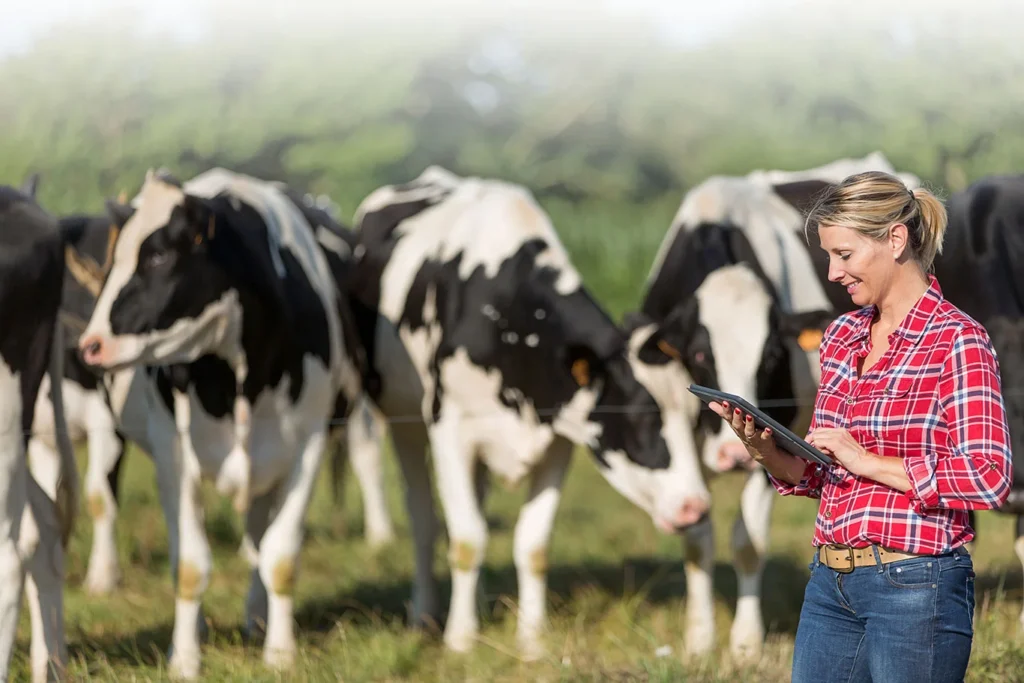
Leaders across the food and dairy industry recognize that publicly disclosing dairy methane emissions represents a crucial opportunity to increase transparency and accountability to external stakeholders, including investors, regulatory bodies, customers, civil society, and others.
Methane-specific disclosure can help inform where to target reduction efforts and track how dairy-sourcing companies and the sector as a whole are progressing toward goals. Public disclosure is also key to ensuring accountability within a landscape of growing investor focus on sustainability, new sustainability-disclosure regulations, and consumer demands for transparency. The following guidance outlines key methane disclosure metrics and recommendations on where and how to disclose them.
Dairy Methane Disclosure Metrics
Many reporting frameworks and disclosure platforms lack guidance on what metrics to disclose to effectively track and report progress on agricultural (dairy) methane. Table 1 presents key disclosure metrics designed to enhance transparent reporting and tracking of dairy methane impacts.
Dairy-sourcing companies should report on “essential” metrics to ensure adequate transparency about their methane emissions, while “additional” disclosures offer an opportunity to demonstrate greater climate leadership. Among these, metric 15 emphasizes reporting on actions and progress toward reducing dairy methane. Although optional in the first year, this metric becomes increasingly significant to showcase ongoing improvements in subsequent years. Additional information on calculating dairy methane emissions needed for the metrics in Table 1 can be found in Developing a Dairy Methane Inventory.
Many metrics presented in Table 1 below require companies to differentiate between Scope 1 agricultural methane emissions, which come directly from owned operations (e.g., on-farm enteric emissions for companies that own dairy farms), and Scope 3 agricultural methane emissions, which are indirect emissions from supply chain activities (e.g., on-farm enteric emissions from purchased dairy products). Whether or not your company owns or operates dairy farms will determine whether to categorize the emissions as Scope 1 or Scope 3.
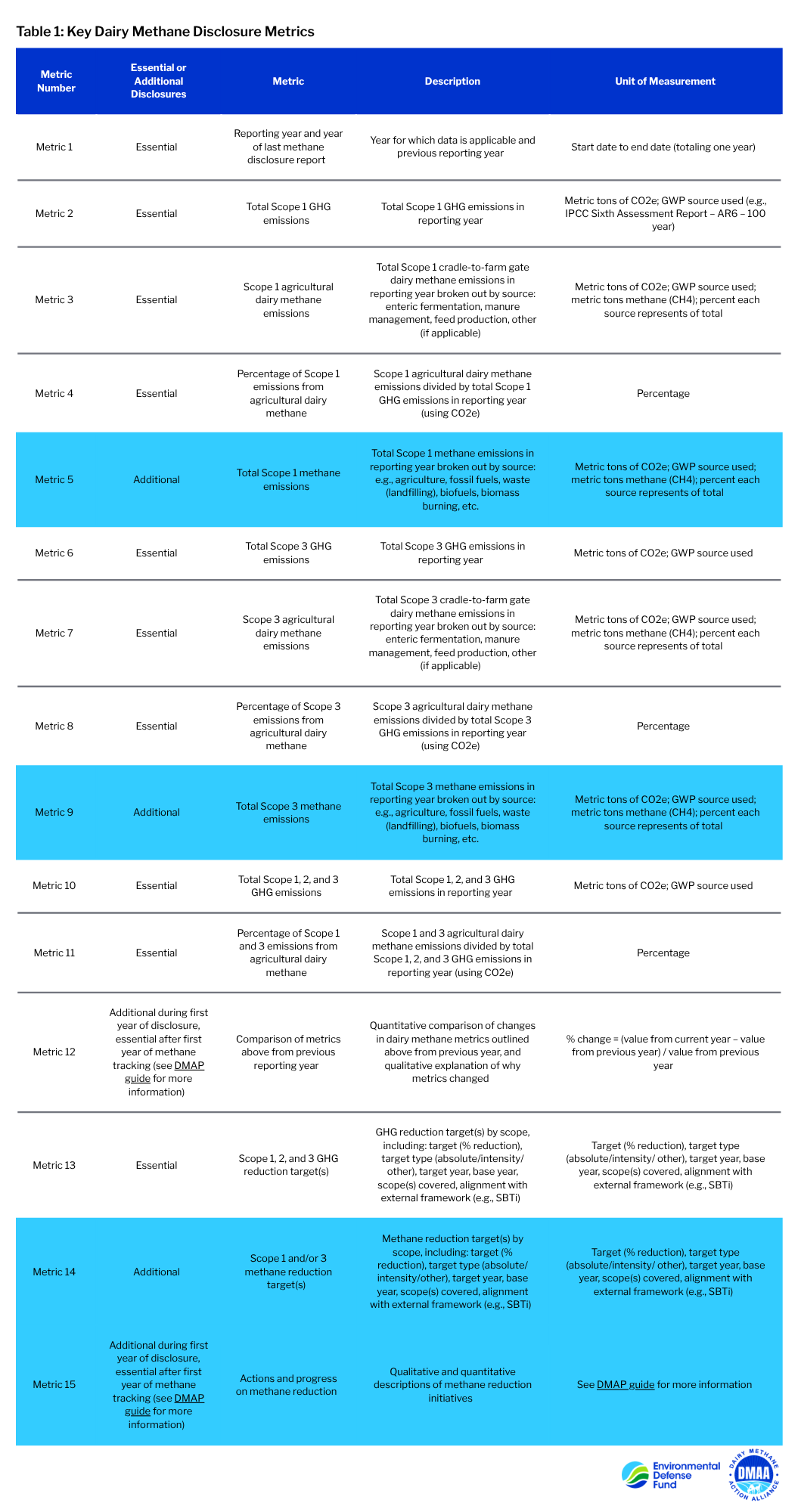
These metrics were chosen to align with evolving ESG reporting frameworks and address existing gaps in current regulations. They help define the scope of corporate dairy methane emissions, identify methane hotspots, and track emissions over time. By providing detailed insights, these metrics also clarify how mitigation efforts affect overall methane emissions, making them valuable tools for companies striving to manage and reduce their environmental impact.
Methane Disclosure Recommendations
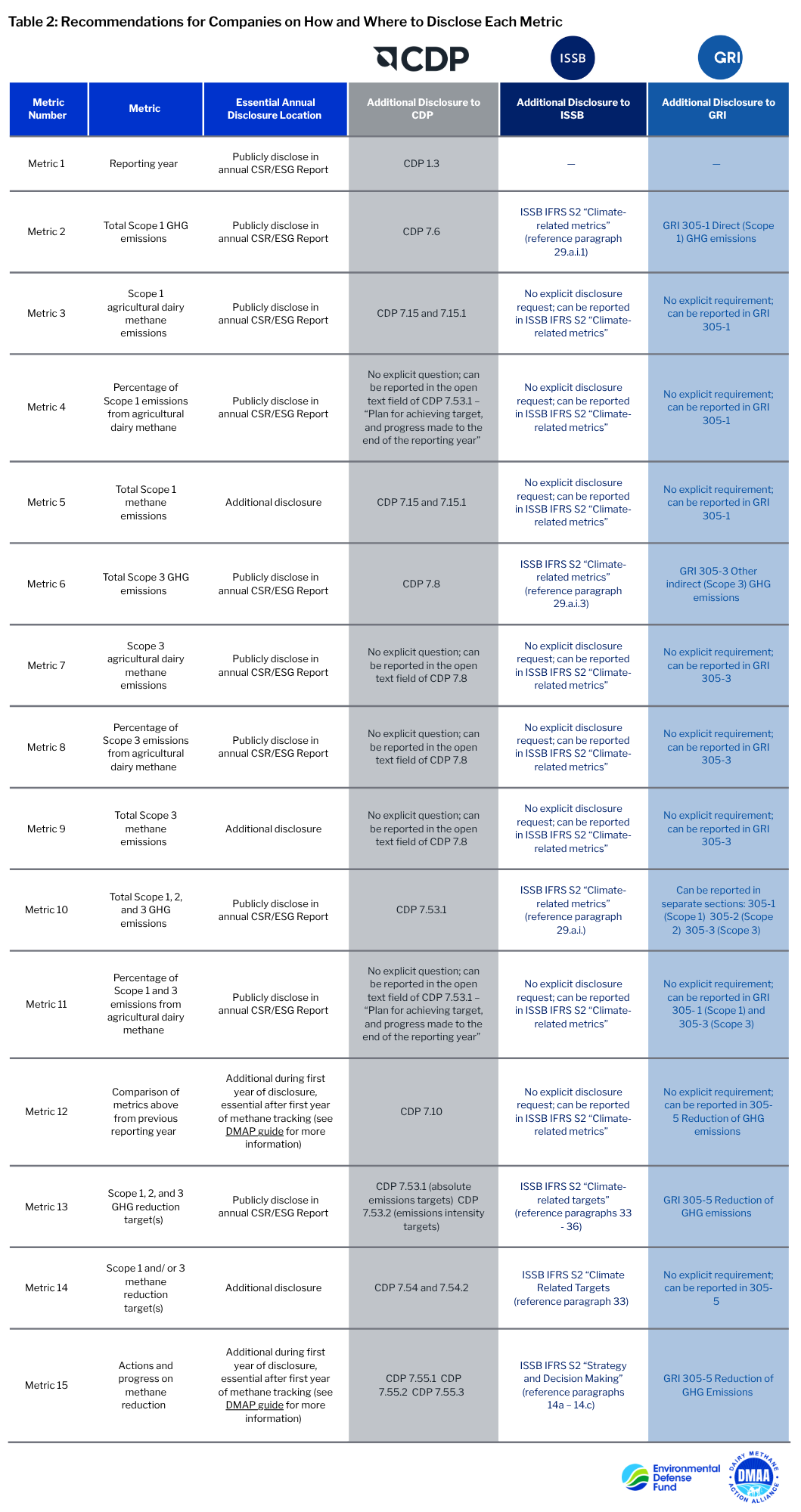
To enhance transparency and demonstrate climate leadership, dairy-sourcing companies are encouraged to publicly disclose essential methane metrics in their annual CSR and ESG reports. These reports provide an accessible platform to communicate progress on sustainability issues to stakeholders. Companies can further strengthen their disclosures by using recognized industry frameworks such as CDP, the International Sustainability Standards Board (ISSB), and the Global Reporting Initiative (GRI).
Publicly reporting methane metrics is a vital step toward fostering industry-wide accountability. While CSR and ESG reports are public-facing, external frameworks like CDP can remain private, making them a valuable supplement to a public sustainability report rather than a replacement. Companies should consider disclosing methane data as part of their Scope 1 and Scope 3 GHG emissions, where applicable. Table 2 outlines specific recommendations for incorporating methane metrics into existing frameworks, even in cases where explicit questions or categories are not yet available. This ensures that companies can effectively communicate their methane reduction efforts within the structure of widely recognized reporting standards.
Building on these disclosures, dairy-sourcing companies can develop Dairy Methane Action Plans (DMAPs) to provide stakeholders with a clear roadmap for managing climate risks and meeting methane reduction goals. By integrating methane mitigation strategies into their action plans, companies emphasize the importance of addressing this challenge while positioning themselves as sustainability leaders within the food and dairy sector.
EDF's Dairy Methane Masterclass
Ready to learn more? Gain practical insights into methane accounting, disclosure, action planning, and stakeholder engagement.