Disclose Policy Priorities
Environmental Defense Fund
Companies should actively engage on climate policy to identify opportunities, leverage incentives, and prepare for future regulations. Disclosing climate policy priorities helps align advocacy with business goals, build investor confidence, and support supply chains in achieving a net zero transition.

According to the World Economic Forum, the financial risk of inaction from climate-related damages has costed the global economy over $1 trillion between 2020 and 2024, and that projections indicate up to 7% annual corporate earnings being negatively impacted by the end of 2025.1 Extreme weather events are having a clearly negative impact on business, forcing companies to consider the cost of climate risks now more than ever. A key component of this puzzle is policy.
Even as the climate policy landscape shifts globally, the sustainability goals of most of the world’s leading companies have persisted in recognition of the financial risk. According to the World Business Council for Sustainable Development, 92% of polled companies in 2025 still believe the benefits of a net zero economy outweigh the costs of transitioning.2
While your company navigates setting climate goals or is on the journey to make progress toward your goals, it is necessary to consider the policy landscape in which you operate and engage. Policy and regulation play an important role in corporate climate action — a positive policy environment can provide the standard and tools that are critical to the success of your business.
Your company should develop and disclose climate policy priorities to ensure that the policies impactful to your business create an ecosystem that allows you to decarbonize fast without harming nature or communities in the process. Identifying relevant policies, disclosing them and showing how you engage makes clear how your company mitigates the risk climate can pose to your business.
Why Engage on Good Climate Policy?
- To Identify Good Policies: Your company cannot feasibly engage every policy out there, but you can focus on the right ones that are material to your business. Not only that, but your company can prioritize the policies that are well-defined and science-based. For more guidance and best practice on what good climate policies look like, check out our Assess Your Trade Associations Guide.
- To Take Advantage of Policy Incentives: Provisions embedded within legislation can allow your company’s individual sustainability efforts to be carried out more feasibly and profitably. By making your priorities public, your company can directly represent how it plans to reach its sustainability goals, ensuring that the company advocates directly for legislation within the priority areas and that your trade associations are aware of your policy positions.
- To Be Prepared for Future Regulatory Changes: Policy can change quickly and abruptly within individual countries across the world. By engaging transition-supporting policies, your company can better manage regulatory risks and prepare for future shocks, whether they are a result of geopolitical uncertainties or political shifts. Failing to anticipate these changes by lacking climate policy priority articulation can result in expensive compliance surprises, disruptions in operation, and stranded investments. Disclosing policy priorities is future-proofing for your company – getting ahead on advocacy for your goals.
Why Disclose Your Climate Policy Priorities?
- To Align Internally on Lobbying and Climate: By officially disclosing your company’s climate policy priorities, your business is ensuring that its lobbying activity and advocacy across the company is in line with policy that increases the profitability and operational favorability of its sustainability and decarbonization efforts. This helps avoid internal fragmentation and ensure that all stakeholders understand the implications of public policies.
- To Increase Investor Confidence: According to MSCI, around 84% of polled investors believed that extreme weather poses a negative risk to the economy.3 By disclosing your policy priorities, your company is demonstrating to investors that its political engagement is working in tandem with its own sustainability efforts. Additionally, this disclosure conveys that your company understands the legislative environment necessary to achieve its goals feasibly and profitably, adding credibility to your efforts and plans that investors must account for.
- To Support Transition-Aligned Supply Chain Management: By disclosing your climate policy priorities, your company sends signals across its supply chain in support of the implementation of decarbonization and sustainable practices, allowing for greater Scope 3 emissions and risk mitigation. As suppliers look toward their anchor customers, articulating a transition-aligned policy priority framework reduces the likelihood of supply chain manufacturers making costly decisions that are misaligned with your company’s policy priorities. As a result of policy advocacy, companies with global supply chains can encourage better behavior across their supplier network in countries with fewer climate mandates to add greater resiliency against future economic shocks.
Case Study
Unilever
Unilever have clearly disclosed their advocacy priorities, which have been carefully established to be in line both with reaching science-aligned emission reduction targets and with maximizing operational performance. These priorities start on a broader, global scale for reaching net zero – including raising climate ambition, advancing carbon pricing, scaling of renewable energy, preserving nature, and setting robust standards. They then go deeper into their sector-specific priorities that underpin their key work – including, forest-risk commodities, cleaner packaging, regenerative agriculture, and clean transportation infrastructure. By doing this, Unilever make it clear not only the material priorities that are impactful for their business, but also the specific areas they plan to engage to ensure their decarbonization and sustainability work is accelerated.
Most critically, Unilever have disclosed their Climate Policy Engagement (including assessment of trade associations), connecting their involvement to goals. By disclosing their positive policy engagement, they not only demonstrate leadership, but also clarity to their stakeholders on how they are actively working toward these policy goals and not against.
Unilever write: “Importantly, by supporting policies that create a level playing field, we aim to de-risk the transition, helping us achieve our ambitions without putting the business at a competitive disadvantage.”
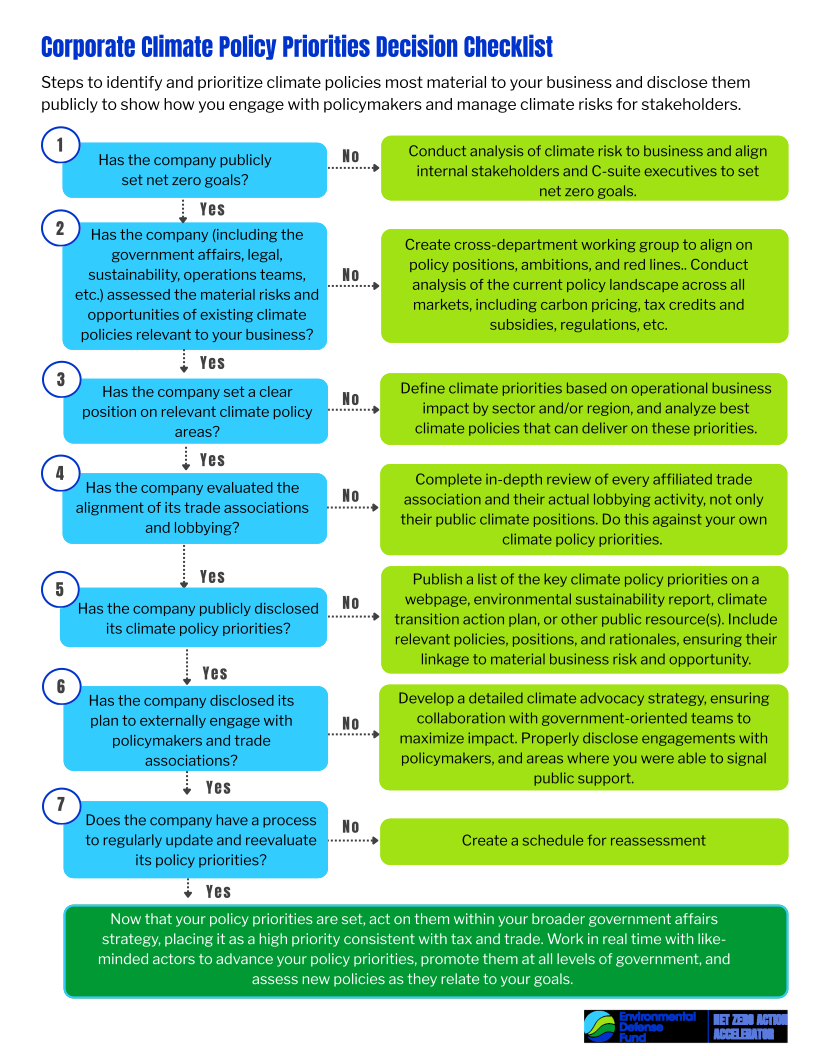
Decision Checklist
Policy is a key component in mitigating the negative risks extreme weather events pose to businesses. In order to act on policy, companies should identify and disclose the policy issues that are material to their business and the policies they will prioritize. These priorities ensure that the policies impactful to your business create an ecosystem that allows you to decarbonize fast without harming nature or communities in the process. Disclosing them publicly shows how you engage policymakers and makes clear to your stakeholders how you mitigate that risk. See our checklist below for step-by-step guidance.